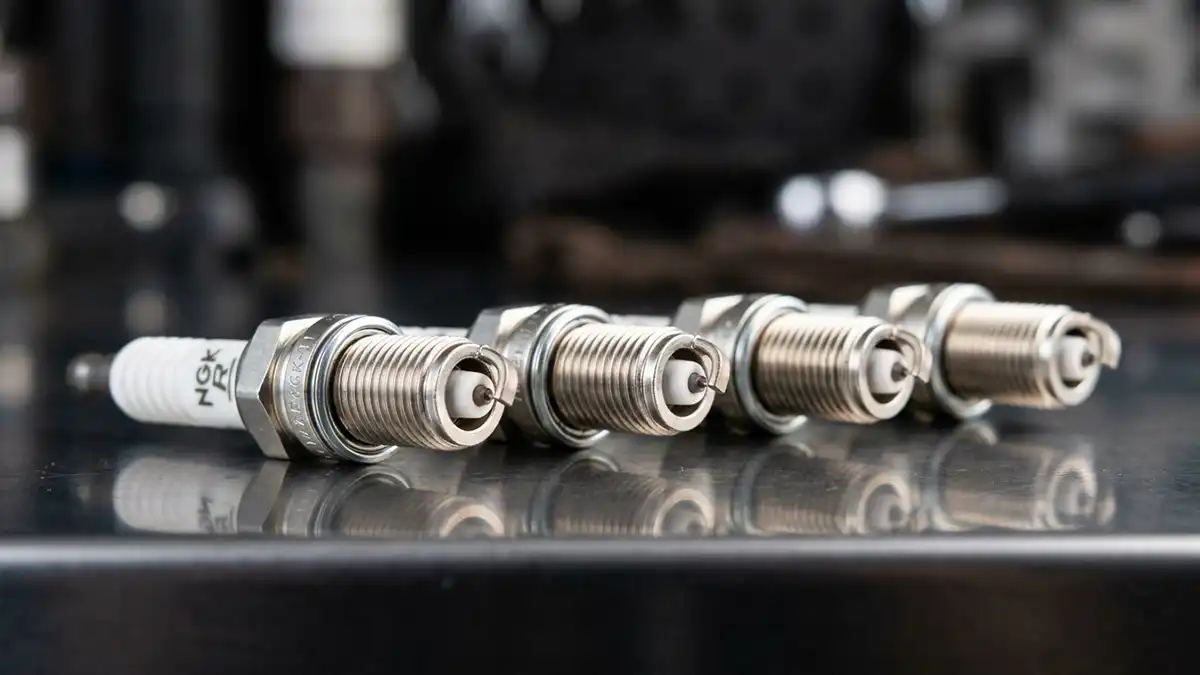
Spark plugs are the small parts that ignite the air-fuel mixture inside your engine’s cylinders. They take the high-voltage pulse from the ignition system and turn it into the spark that powers the engine, dozens of times per second. They’re also one of the few engine parts considered normal wear items: they get used up and need periodic replacement.
For most cars, a spark plug replacement costs $120 to $350 at a shop in the U.S., depending mostly on how many cylinders your engine has and what type of plugs it uses. On a typical four-cylinder car, expect $150 to $250. Doing the job yourself cuts that to roughly $20 to $120 for the plugs alone. Here’s what drives the price, when you actually need to change them, and what happens if you don’t.
When to change spark plugs
Unlike many other repairs, spark plug replacement follows a schedule. The interval depends on the plug type:
- Copper plugs — change every 30,000 miles (common on older cars)
- Platinum plugs — change every 60,000 to 100,000 miles
- Iridium plugs — change every 60,000 to 100,000 miles
The exact interval for your car is in the owner’s manual, and it’s worth following. Some modern cars with iridium plugs can go 100,000 miles or more, which is why many owners never think about plugs until the car starts running poorly.
If you bought the car used and don’t know when the plugs were last changed, it’s reasonable to have them inspected — especially if the car has more than 60,000 miles and there’s no record of the service.
Signs of worn spark plugs
Worn or failing plugs don’t always set off the check engine light right away. The first signs are usually how the car feels:
- Rough idle — the engine vibrates or shakes at a stop.
- Misfires under load — hesitation or stumbling when you accelerate, especially uphill.
- Hard starting — the engine cranks longer than usual.
- Worse fuel economy — the engine has to work harder than it should.
- A flashing check engine light — a warning of a serious misfire (more on that below).
If plugs are the cause, the check engine light often shows a misfire code. P0300 means a random misfire (not tied to one cylinder), while codes like P0301 through P0308 point to specific cylinders. Keep in mind that misfires can also come from ignition coils, fuel injectors, or vacuum leaks — plugs are one suspect, not the only one.
Spark plug replacement cost breakdown
Here’s what you can expect to pay in the U.S.:
| Item | Typical range | Notes |
|---|---|---|
| Spark plugs (set of 4) | $20 – $60 | Copper plugs are cheaper; iridium and platinum cost more |
| Spark plugs (set of 6 or 8) | $40 – $120 | More cylinders means more plugs |
| Labor at a shop | $80 – $250 | 1 to 2 hours on most cars |
| Total for a 4-cylinder at a shop | $120 – $300 | Parts plus labor |
| Total for a V6 or V8 at a shop | $150 – $350+ | More plugs and more labor |
| DIY total | $20 – $120 | Just the parts and about an hour of your time |
These are typical U.S. market ranges. Some vehicles cost more — here’s why.
What affects the price
- Number of cylinders. A four-cylinder engine has four plugs; a V6 has six; a V8 has eight. You’re buying more parts, and the job takes longer.
- Plug type. Copper plugs are cheap ($2 to $6 each) but wear out fastest. Platinum and iridium plugs cost $8 to $25 each but last far longer. Many modern cars require iridium or platinum — using copper plugs in those engines can cause drivability problems, so match what the car calls for.
- How accessible the plugs are. This is the biggest wildcard in labor. On many four-cylinder cars, the plugs sit on top of the engine and are easy to reach — a 45-minute job. On sideways-mounted V6 engines, the rear plugs can be tucked against the firewall and hard to reach. On some vehicles, removing other parts to reach the plugs adds an hour or more of labor.
- Shop labor rates. Independent shops typically charge $80 to $150 per hour; dealerships often $150 to $200 per hour.
- Whether the ignition coils come off. Coils sit on top of the plugs on most modern engines. That’s routine work, not extra, but if a coil is damaged during removal, that’s a separate part cost.
Why you shouldn’t put it off
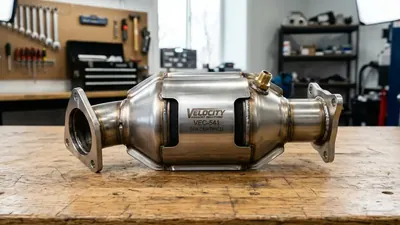
Spark plugs are cheap compared to what happens when you ignore them. A badly worn plug causes misfires, and a persistent misfire is one of the fastest ways to damage a catalytic converter. Unburned fuel from the misfired cylinder flows into the converter, where it burns and overheats the catalyst. The result is a converter failure — a repair that typically costs several hundred dollars or more, compared with the $120 to $350 a plug change costs. The P0420 page explains converter failure codes in detail.
A flashing check engine light is the car’s way of saying a misfire is bad enough to damage the converter. That’s a “stop driving soon and get it diagnosed” warning, not a “keep going” signal.
Worn plugs also reduce fuel economy and make the engine run less smoothly overall. It’s one of those repairs that’s cheaper and easier the sooner you do it.
Can you do it yourself?
Spark plug replacement is a common DIY job, but it’s not for everyone. Here’s an honest look:
- Easy on many cars. If your plugs are on top of the engine and easy to see, the job is straightforward: remove the coil or wire, unscrew the old plug with a spark plug socket, gap the new plug if needed, and install it by hand until snug.
- Riskier on others. Sideways V6 and V8 engines can have plugs in awkward spots that take patience, long extensions, and sometimes swivel sockets.
- The main risks are over-tightening (which can strip the threads in the cylinder head — an expensive mistake), cross-threading, and dropping debris into the cylinder. Use a torque wrench if you can, and follow the manufacturer’s torque spec.
If you’re not confident, a shop can usually do the job in an hour or two, and that labor is a small fraction of what the same shop would charge for a converter replacement later.
Frequently asked questions
How often should I change my spark plugs? It depends on the plug type and the car. Copper plugs generally need changing every 30,000 miles, while platinum and iridium plugs last 60,000 to 100,000 miles. Check your owner’s manual for the exact interval for your vehicle. If you get a P0300 misfire code or notice rough running, have the plugs inspected regardless of mileage.
What happens if I never change my spark plugs? The plugs wear down, the gap widens, and the spark gets weaker. Eventually you’ll notice rough idling, hesitation, and worse fuel economy. If the misfires continue, they can overheat and damage the catalytic converter — a repair that costs far more than a plug change.
Is it worth buying expensive iridium plugs? If your car calls for iridium or platinum plugs, yes — they’re designed for the engine’s ignition system, and they last much longer than copper. If your car is designed for copper plugs, stick with copper; you won’t gain anything by upgrading. Check the owner’s manual or ask the parts store which type your car requires.