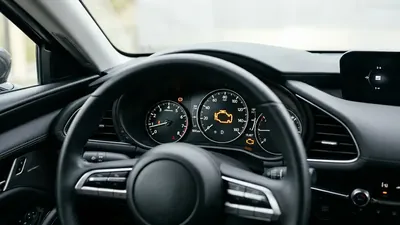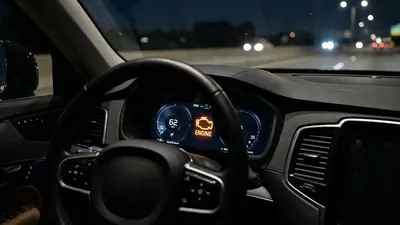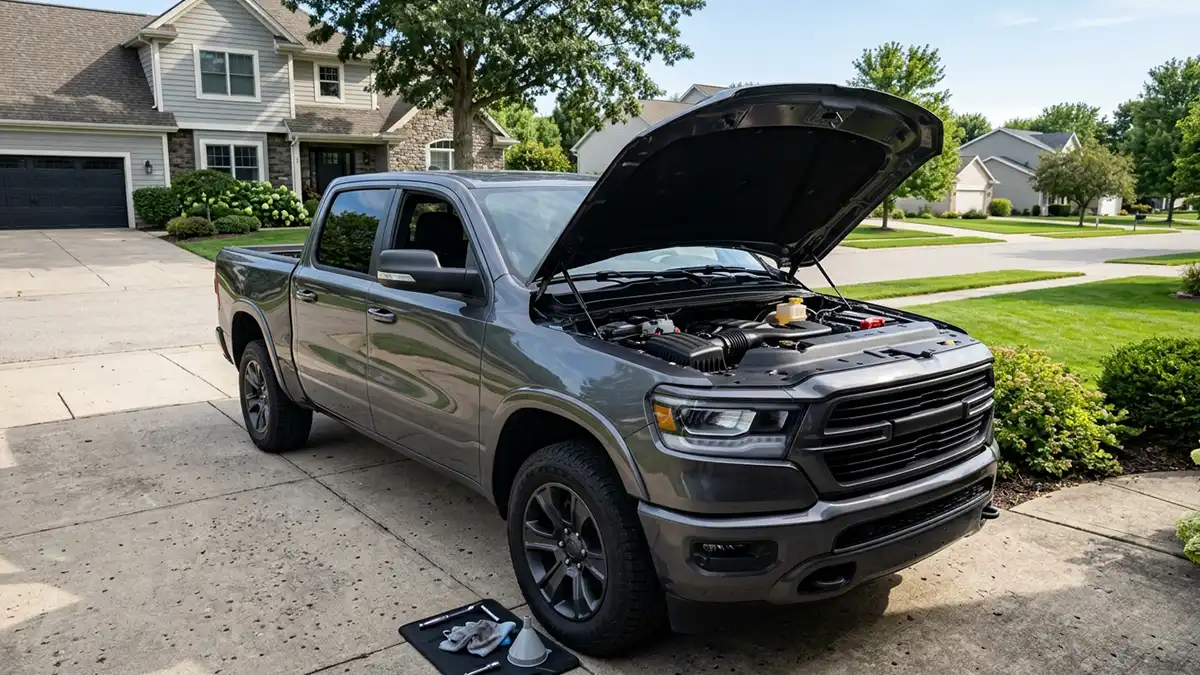
The Ford F-150 has been America’s best-selling truck for decades, which means millions are on the road — and millions of check engine lights. If yours just came on, you’re in good company: the codes that show up on these trucks are so predictable that many mechanics can guess the diagnosis before plugging in a scanner. This guide covers the codes F-150 owners see most, what they mean, and how to keep the repair bill small.
Why the F-150 gets the same codes over and over
Like every modern vehicle, the F-150’s computer constantly checks the engine and emissions systems. When a reading falls outside the expected range, it stores a diagnostic trouble code and turns on the check engine light. Over years of service, certain weak points show up again and again — and the codes are how they announce themselves.
Which codes you see depends on which engine is under the hood: the 5.4L V8 in older trucks has its own habits, and the 5.0L V8 and 3.5L EcoBoost in newer ones have theirs. The list below covers the codes that show up across generations.
The most common F-150 codes at a glance
| Code | What it usually means | Urgency |
|---|---|---|
| P0171 / P0174 | Lean fuel mixture on one or both banks | Moderate |
| P0300 family | Engine misfire | High |
| P0420 / P0430 | Catalytic converter efficiency low | Moderate |
| P0128 | Thermostat stuck open | Low |
| P0455 / P0456 / P0442 | Evaporative system leak | Low |
| P0740 | Torque converter clutch circuit problem | Moderate |
| P0700 | Transmission control system fault | Moderate |
| P0500 | Vehicle speed sensor problem | Low |
| P0340 / P0335 | Camshaft or crankshaft sensor signal problem | Moderate |
Now let’s dig into each group in plain English.
Lean fuel codes: P0171 and P0174
Lean codes are the calling card of older F-150s, especially the 5.4L Triton V8. A P0171 code means the engine is running lean on bank 1 (too much air, not enough fuel). P0174 is the same condition on bank 2 — the other side of the engine. When both codes show up together, the problem is almost always something both banks share: an intake vacuum leak, a leaking intake manifold gasket, or a cracked PCV hose.
The classic story: the truck idles rough or slightly high, feels a little sluggish, and smells like gas on cold starts. The usual culprits on the 5.4L are:
- Vacuum leaks — old rubber hoses that split and let in unmetered air
- Intake manifold gaskets — seals that dry out and leak over time
- A dirty mass airflow sensor — reads low, so the computer under-fuels
- Fuel pressure problems — a weak fuel pump or clogged filter on high-mileage trucks
The good news: most lean-code fixes are moderate. A vacuum hose is a few dollars, a mass airflow sensor cleaning a $10 can of cleaner, and an intake manifold gasket job typically $300 to $600 at a shop. Don’t let it ride for months — a lean condition can make the engine run hot and, in bad cases, damage it.
Misfire codes: P0300 and the P0301–P0308 family
Misfire codes are everywhere on F-150s, across all engine generations. P0300 means random misfires across multiple cylinders. Codes like P0301 through P0308 name a specific cylinder — the truck’s V8s have eight, so the number tells you exactly which one is missing.
On F-150s, the causes in order of likelihood:
- Spark plugs — the most common cause, especially past 100,000 miles
- Ignition coils — each plug has a coil on top, and they fail one at a time
- Fuel injectors — especially on EcoBoost engines
- Vacuum leaks and intake problems — common on the older 5.4L
One special note for 5.4L 3-valve owners: this engine’s spark plugs are famous for breaking during removal, thanks to the two-piece plug design used in that generation. Follow the factory procedure carefully if you DIY, or have a shop that knows 5.4L trucks do it.
A misfire is the code to take seriously. Every miss sends unburned fuel toward the catalytic converter, which can overheat and destroy it — turning a $300 plug-and-coil repair into a $1,000+ converter bill. If the light is flashing, pull over when it’s safe.
Catalytic converter codes: P0420 and P0430
The catalytic converter cleans exhaust gases, and the computer watches it through the oxygen sensors. P0420 means the converter on bank 1 isn’t cleaning well enough; P0430 is the same story on bank 2.
Converters genuinely wear out on high-mileage F-150s, but a P0420 or P0430 is also frequently a symptom of something else. Before you commit to the expensive fix, check for the real causes:
- An unresolved misfire — the number one converter killer
- A bad oxygen sensor — a failing sensor can report a converter problem that isn’t there
- An exhaust leak — fresh air entering near the sensors skews their readings
Converter replacement is the most expensive repair in this guide — typically $700 to $1,500 or more. That’s why the smart play is a proper diagnosis: read all codes, fix any misfire first, and confirm the converter is genuinely bad before spending that kind of money.
P0128: the thermostat is stuck open
A P0128 code is very common on F-150s with the 4.6L and 5.4L V8s. It means the engine isn’t warming up to operating temperature fast enough — almost always a thermostat stuck open. The engine runs cold, the heater blows lukewarm air on winter mornings, and fuel economy drops.
The part itself is cheap — usually $20 to $50 — but on F-150s it’s tucked away and labor-heavy, so shop totals of $200 to $400 are normal. Not an emergency, but a cold-running engine uses more gas and wears faster.
EVAP codes: P0455, P0456, and P0442
The evaporative (EVAP) system seals in fuel vapors from the gas tank and burns them in the engine. When the computer detects a leak in that sealed system, you’ll see one of these:
Start with the free fix: tighten the gas cap. A loose cap causes a large share of EVAP codes, F-150s included, and the light may go out on its own after a few drive cycles. If the cap isn’t it, the usual suspects are a cracked EVAP hose, a failing purge valve, or a rusted filler neck. These codes never affect how the truck drives, but they’ll fail an emissions test until repaired.
Transmission codes: P0740 and P0700
These two are easy to misunderstand. A P0740 code means the torque converter clutch circuit has a problem — the converter isn’t locking up like it should. On older F-150s with the 4R70E and 4R75E transmissions, this shows up as a highway shudder, higher RPMs at cruising speed, and worse fuel economy. The fix ranges from a simple connector repair to a converter or transmission rebuild, so get it diagnosed early — the longer you drive on it, the more it can cost.
P0700 is different: it’s the transmission computer reporting a fault and asking the engine computer to turn on the light. The real problem is a related transmission code that most basic scanners can’t read, so you’ll likely need a shop with transmission-capable diagnostic equipment.
Sensor codes: P0500, P0340, and P0335
Three sensor codes round out the F-150 list. P0500 is the vehicle speed sensor — when it fails, the speedometer can stop working and the transmission may shift oddly, since it uses that signal too. It’s usually a moderate, straightforward fix.
P0340 and P0335 are signal problems from the camshaft and crankshaft position sensors, which tell the computer where the engine is in its rotation. A bad signal can cause hard starting, stalling, or a no-start. If the truck still runs, get it looked at soon — these can leave you stranded.
What to do when your F-150 throws a code
Follow the same playbook every time, and you’ll avoid most of the money mistakes:
- Read every code, not just the first. A P0171 alone tells a different story than P0171 with P0174, and a P0420 next to a misfire code is a clue, not a final answer.
- Do the free checks first. Gas cap, visible vacuum hoses, and loose wiring solve a surprising number of F-150 codes.
- Fix misfires before anything else — they cause the expensive converter damage.
- Ask for a diagnosis, not a part. A code names a system, not always the failed component. A shop that explains its reasoning beats one that just quotes a replacement.
- Know your engine. The 5.4L, 5.0L, and EcoBoost each have their own quirks — a mechanic who works on F-150s regularly knows the difference.
Frequently asked questions
What is the most common check engine code on a Ford F-150? It depends on the generation, but lean codes like P0171 and misfires like P0300 are consistently at the top, especially on trucks with the 5.4L V8. Catalytic converter and EVAP codes are also extremely common across all engine options.
Can I keep driving my F-150 with the check engine light on? With a solid light and a smooth-running truck, most codes in this guide are safe to drive on for a while — EVAP leaks and thermostat codes won’t strand you. Treat misfires seriously, and watch transmission codes like P0740, which get more expensive the longer you wait. If the light is flashing, stop driving when it’s safe.
How much do common F-150 repairs cost? Small fixes run from free to a few hundred dollars: a gas cap is under $20, a vacuum hose a few dollars, plugs and coils typically $300 to $600 installed, and a thermostat about $200 to $400. Bigger repairs cost more — intake manifold gaskets around $300 to $600 and a catalytic converter $700 to $1,500 or more. Your total depends on the engine, the parts you choose, and local labor rates.