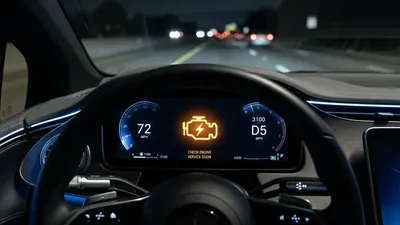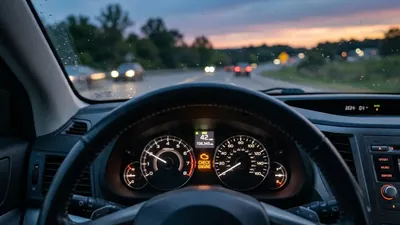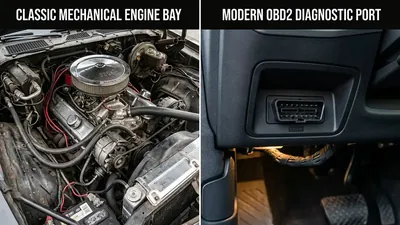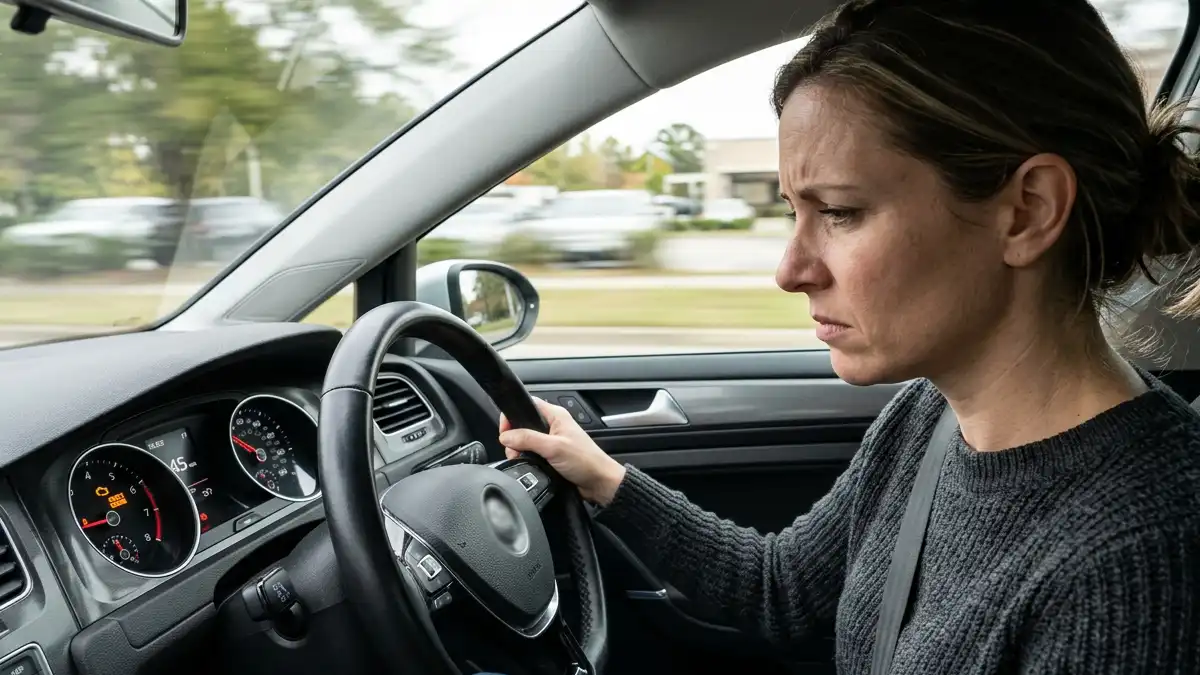
The check engine light turns on, and your first question is almost always the same: “Can I still drive this car?” The honest answer is: it depends. The light itself isn’t the emergency — the reason it’s on is. Some problems are perfectly safe to drive with for weeks. Others can damage your engine or your wallet within minutes. This guide helps you figure out which situation you’re in.
Step 1: Check whether the light is solid or flashing
Before anything else, look at the light itself. This one detail decides how much time you have.
- Solid light: The computer has stored a fault. The car usually drives normally. You have time to diagnose and plan a repair.
- Flashing light: The engine is misfiring right now. Unburned fuel is flowing into the catalytic converter, which can overheat and destroy it. Pull over when it’s safe and don’t keep driving. A flashing light is most often accompanied by a misfire code like P0300, which means random misfires across multiple cylinders.
If the light is flashing, stop here: don’t drive the car further than a short, gentle distance, and call a tow if you need to travel far.
Step 2: Judge how the car is behaving
If the light is solid, the next test is simple: how does the car feel? Pay attention to these things on a short, careful drive:
- Is the engine idling smoothly?
- Does it hesitate, jerk, or stumble when you accelerate?
- Is there a loss of power or a shaking sensation?
- Any new noises, smoke, or burning smells?
- Is the temperature gauge in the normal range?
If the car runs smoothly and nothing feels wrong, driving it to a shop or continuing your normal routine for a short time is usually fine. If it’s running rough, shaking, stalling, or overheating, treat the situation as urgent — even with a solid light.
Problems that are usually safe to drive with (temporarily)
Some of the most common check engine light causes have zero effect on how the car drives. That doesn’t mean ignore them, but it does mean you don’t need to panic.
- Evaporative system leaks — codes like P0442 (small leak) and P0456 (very small leak) are often caused by a loose gas cap. Tighten the cap and the light may go out on its own. Even if it doesn’t, the car drives exactly as before. A P0455 code is a large leak, which can be a disconnected hose or a cracked component, but still rarely affects drivability.
- Oxygen sensor failures — codes like P0135 and P0141 mean a sensor’s heater circuit has failed. The car will usually drive fine, though fuel economy can drop slightly. It’s not an emergency, but the sensor needs replacing eventually.
- A thermostat stuck open — the P0128 code means the engine isn’t warming up to temperature fast enough. You can drive, but the engine will run cooler than designed, fuel economy suffers, and the heater may blow cold air. Watch the temperature gauge and get it fixed soon.
Problems that mean stop driving soon
These codes point to issues that get more expensive the longer you drive. Get them looked at promptly.
- Misfires — if you have a P0300 misfire code but the light isn’t flashing yet, you’re on borrowed time. The misfire is happening intermittently, and every miss sends unburned fuel toward the catalytic converter.
- Lean fuel mixture — a P0171 code means the engine is running lean (too much air, not enough fuel). A lean condition can make the engine run hot, which risks damage over time, and it can also hurt the catalytic converter. It’s often caused by a vacuum leak or a dirty mass airflow sensor, which are moderate repairs — but waiting too long can turn them into engine damage.
- Catalytic converter efficiency — codes like P0420 mean the converter isn’t cleaning exhaust gases well enough. The car will still drive, but you’re polluting more than you should, fuel economy suffers, and you’ll fail an emissions test. The repair is expensive, so get a real diagnosis early rather than guessing.
Signs you should pull over immediately
No matter what the light is doing, stop driving right away if you notice any of these:
- The check engine light is flashing
- The temperature gauge is in the red zone or climbing fast
- The oil pressure light comes on
- You see smoke from under the hood or the exhaust
- You smell burning or gasoline
- The engine loses power suddenly or makes loud knocking noises
These are signs of active damage, not just warning lights.
Why driving on the wrong code is expensive
Here’s the real cost of guessing wrong. A misfire caused by a bad ignition coil might cost $100–$300 to fix. If you drive with that misfire long enough to ruin the catalytic converter, the repair jumps to $1,000 or more. A loose gas cap is free to fix; ignoring a P0420 code for a year while the converter slowly fails means a bill in the hundreds to over a thousand dollars either way.
The pattern is the same across almost every code: the earlier you catch it, the cheaper it is. A code reader is the cheapest diagnostic tool you own — it tells you which system to look at instead of playing the guessing game.
What to do before you drive anywhere
If the light is on and you’ve decided it’s safe to drive, take five minutes to do this:
- Tighten the gas cap. It’s the most common cause of evaporative codes and costs nothing.
- Read the codes with your scanner so you know what you’re dealing with before you head out.
- Quick-check fluids — oil and coolant, since a low level can turn a small problem into a big one.
- Plan the repair. Most solid-light problems can wait days to a couple of weeks, but schedule the work instead of forgetting about it.
The short version
- Flashing light? Don’t drive.
- Solid light and the car runs perfectly? You can drive, but get the code checked soon.
- Solid light and the car runs rough? Drive gently to the nearest shop and no further.
- Any warning light that says “hot” or “oil” while you drive? Pull over now.
When in doubt, the safest answer is always: a tow is cheaper than an engine.
Frequently asked questions
How far can I drive with the check engine light on? There’s no fixed mileage limit — it depends entirely on why the light is on and how the car behaves. With a solid light and a smooth-running engine, you can usually drive for days or weeks on minor issues like a loose gas cap. With a flashing light or a rough-running engine, you should drive only a short, gentle distance to a shop — or not at all.
Will driving with the check engine light on cause more damage? Sometimes. Misfires and lean fuel conditions can damage the catalytic converter and, in bad cases, the engine itself. Many other causes, like evaporative leaks, do no damage at all while driving. The safe approach is to read the code first so you know which category you’re in.
Will the check engine light go off by itself? Yes, for some minor problems — a loose gas cap, for example — the light can turn off on its own after a few driving cycles once the condition clears. But the stored code usually remains, and if the underlying problem is still there, the light will come back. A light that goes out and returns is a sign the fault is real and needs diagnosis, not celebration.