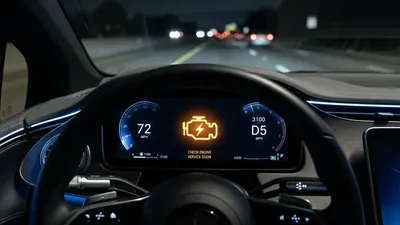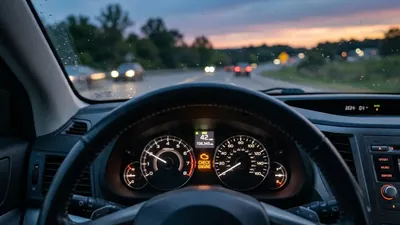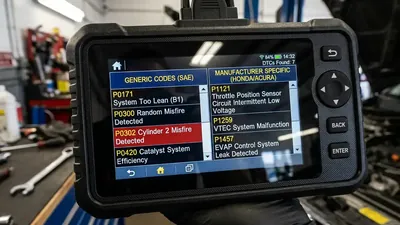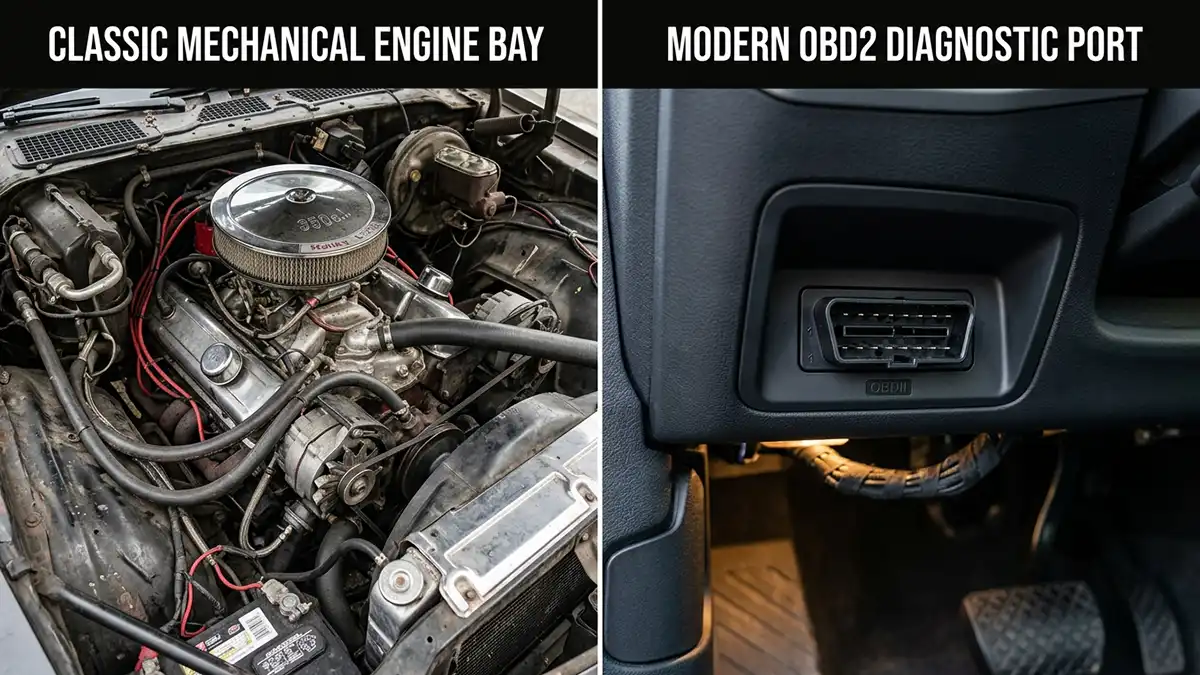
Plug a scanner into a modern car and you can read codes, watch live sensor data, and reset the check engine light in minutes. Do the same thing with a car from the early 1990s and nothing works — the connector is different, the codes are different, and the procedure involves a jumper wire and a blinking light. That divide is the difference between OBD2 and OBD1.
This guide explains what on-board diagnostics are, how OBD2 replaced OBD1, why 1996 is the dividing line for cars sold in the US, and what it all means when you’re holding a code reader.
What OBD actually is
“On-Board Diagnostics” (OBD) is the self-diagnostic system built into your car. The engine computer watches sensors and circuits while you drive, and when something goes wrong, it stores a fault code and turns on the check engine light. OBD is how your car tells you what’s wrong — and the reason a code reader can talk to it at all.
OBD has had two generations:
- OBD1 — the first generation, used roughly from the early 1980s through 1995.
- OBD2 — the standardized second generation, required on 1996 model year cars and light trucks in the US.
OBD1: every brand spoke its own language
OBD1 was never one system — it was dozens. Every manufacturer built its own version with its own connector, its own codes, and its own way of reading them.
What reading codes on an OBD1 car was like:
- On some cars, you shorted two pins in the diagnostic connector with a paperclip or jumper wire, turned the key on, and counted the flashes of the check engine light — a pattern like “three flashes, pause, two flashes” meant code 32.
- Other cars flashed codes through a small light in the engine bay or on an onboard display.
- Some cars had no owner-accessible way to read codes at all. You needed a dealer tool or a shop with the right equipment.
- Codes were brand-specific: the same number could mean a completely different thing on a GM than on a Honda or a Toyota.
OBD1 did help — it gave technicians a starting point — but it created a mess. If you switched brands, you had to learn a whole new system.
Why OBD2 happened
By the late 1980s, emissions regulators wanted cars that were easier to test and fix. California’s air resources board pushed for a standard, and the federal government followed. The result: the Environmental Protection Agency required On-Board Diagnostics II — OBD2 — on all 1996 model year cars and light trucks sold in the United States.
The goal was simple:
- One connector that every car uses
- One code language that means the same thing in every car
- One way to test the emissions systems, both for repair shops and for state inspections
Note that this applied to light-duty gasoline vehicles from 1996. Some heavy-duty trucks and diesel vehicles were phased in later, so “1996” is the rule for cars and light trucks, not for every vehicle ever made.
What OBD2 standardized
Here’s the side-by-side:
| OBD1 (roughly 1980s–1995) | OBD2 (1996 and newer) | |
|---|---|---|
| Connector | Brand-specific, many shapes | One standardized 16-pin connector |
| Codes | Brand-specific meanings | Generic codes mean the same everywhere, plus manufacturer codes |
| Reading codes | Jumper wires, blink counting, dealer tools | Any OBD2 scanner, plug and play |
| Check engine light | Not standardized | Standardized warning light |
| Self-tests | Limited | Continuous monitors run while you drive |
| Freeze frame data | Not available | Snapshot of engine conditions when the code set |
| Emissions testing | Tailpipe and manual checks | Many states plug directly into the OBD2 port |
What OBD2 can do that OBD1 couldn’t
The standardization made a few genuinely new things possible:
- One scanner for every car. A basic OBD2 reader that works on a 1996 Honda also works on a 2024 Chevrolet. With OBD1, you needed brand-specific tools.
- Codes you can look up. Generic codes like P0420 (catalyst efficiency) or P0300 (random misfire) mean the same thing in any car, so a plain-English reference works for nearly everything you’ll see.
- Monitors that test while you drive. The computer continuously checks its emissions systems and reports whether each test has run yet. That’s what readiness monitors are, and states use them for plug-in emissions inspections.
- Freeze frame data. When a code sets, the car saves a snapshot of the conditions at that moment — engine speed, temperature, fuel trim, and more. It’s a huge help for diagnosing intermittent problems.
- Live data. Real-time sensor readings you can watch while the engine runs, which is how you see a lean fuel trim (P0171) happening live instead of guessing.
What this means for you as a car owner
The practical payoff of OBD2:
- If your car is 1996 or newer, any basic scanner works. You don’t need to know your car’s brand-specific system to read the codes.
- You can self-diagnose. Codes like P0171, P0300, and P0455 (a large EVAP leak) come with plain-English explanations and common causes you can check before calling a shop.
- The port is in the same place on every car — under the dashboard on the driver’s side, usually near the steering column. No more hunting for a brand-specific connector.
- Emissions testing got simpler in many states — the inspector plugs into the same port you use.
- If you own a pre-1996 car, expect a different experience. You’ll need the manufacturer’s procedure, an adapter or blink-code tool, or a shop with older equipment.
Still driving a pre-1996 car?
OBD1 cars aren’t un-diagnosable — they’re just less convenient:
- Look up your car’s specific procedure, since each brand had its own.
- Some OBD1 cars can be read with simple blink-code methods you can do at home.
- Parts stores and shops that work on older vehicles have the tools and the knowledge.
- Keep in mind that OBD1 codes are brand-specific, so a generic code lookup won’t apply — search by make and model instead.
The bottom line
OBD1 worked, but it was a patchwork: every brand had its own connector, codes, and procedures. OBD2 replaced it with a single standard — one 16-pin connector, one code language, and continuous self-testing — required on 1996 model year cars and light trucks sold in the US. That standardization is why you can plug a basic scanner into a 20-year-old car and get a code that means exactly the same thing it would in a brand-new one. If your car is from 1996 or later, you’re reading OBD2, and the code language is universal.
Frequently asked questions
Is my car OBD1 or OBD2? If it’s a 1996 or newer car or light truck sold in the US, it’s OBD2. If it’s older, it’s likely OBD1. You can also check the connector: OBD2 uses one standardized 16-pin connector under the dash, while OBD1 connectors varied by brand.
Can I use a modern OBD2 scanner on an OBD1 car? Generally no. OBD1 cars use different connectors and communication methods, so a standard OBD2 scanner won’t connect. You’d need the manufacturer’s procedure — often a jumper wire and blink counting — or shop tools made for that era.
Why does the 1996 cutoff matter? Because the EPA required OBD2 on all 1996 model year cars and light trucks sold in the US. That means every vehicle from that point forward uses the same connector, the same generic code definitions, and the same testing approach — which is why one basic scanner and one code lookup works for almost any car you’ll encounter.