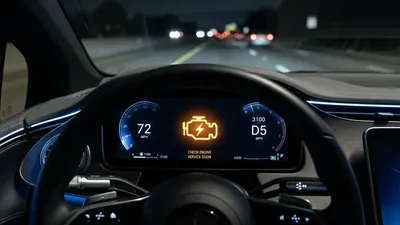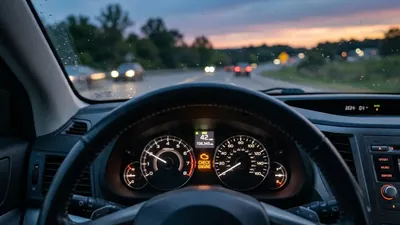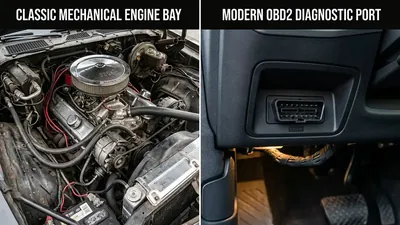
When you look up a diagnostic code, you’ll often see a description like “O2 sensor heater circuit, bank 1 sensor 2.” The code itself — say, P0141 — tells you the system, but “bank 1 sensor 2” tells you exactly where on the car to look. If you’ve ever wondered what that phrase means, you’re not alone. This guide breaks down “bank,” “sensor,” and the numbers that go with them so you can find the right part on your own car.
What a “bank” is
A bank is a row of engine cylinders. It’s a way of splitting the engine into two halves for diagnostic purposes.
- Inline engines (4-cylinder, straight 6-cylinder, and most small engines) have their cylinders in a single row. They have only one bank, so “bank 1” is the only bank there is. Codes on these cars rarely mention bank 2 at all.
- V engines (V6, V8) have cylinders in two rows that meet at an angle. They have two banks.
So “bank 1” simply means one side of the engine, and “bank 2” means the other side. The key question is: which side is which?
Which side is bank 1?
The rule is simple: bank 1 is the side that contains cylinder number 1. On many cars, that’s the side closest to the front of the engine or the radiator. But here’s the catch that trips people up: bank 1 is not always the driver’s side.
On many front-wheel-drive cars, the engine sits sideways (transverse), and cylinder 1 can be on the passenger side. On rear-wheel-drive cars, cylinder 1 is usually on the driver’s side, but not always — some manufacturers number cylinders differently.
The reliable way to find out is:
- Check your owner’s manual for the cylinder numbering diagram.
- Look for an emissions label under the hood — many cars have a diagram printed right on it.
- Ask your parts store or a mechanic if you’re still unsure.
Guessing wrong here means buying and replacing the wrong sensor, which is a common (and annoying) mistake.
What the “sensor” number means
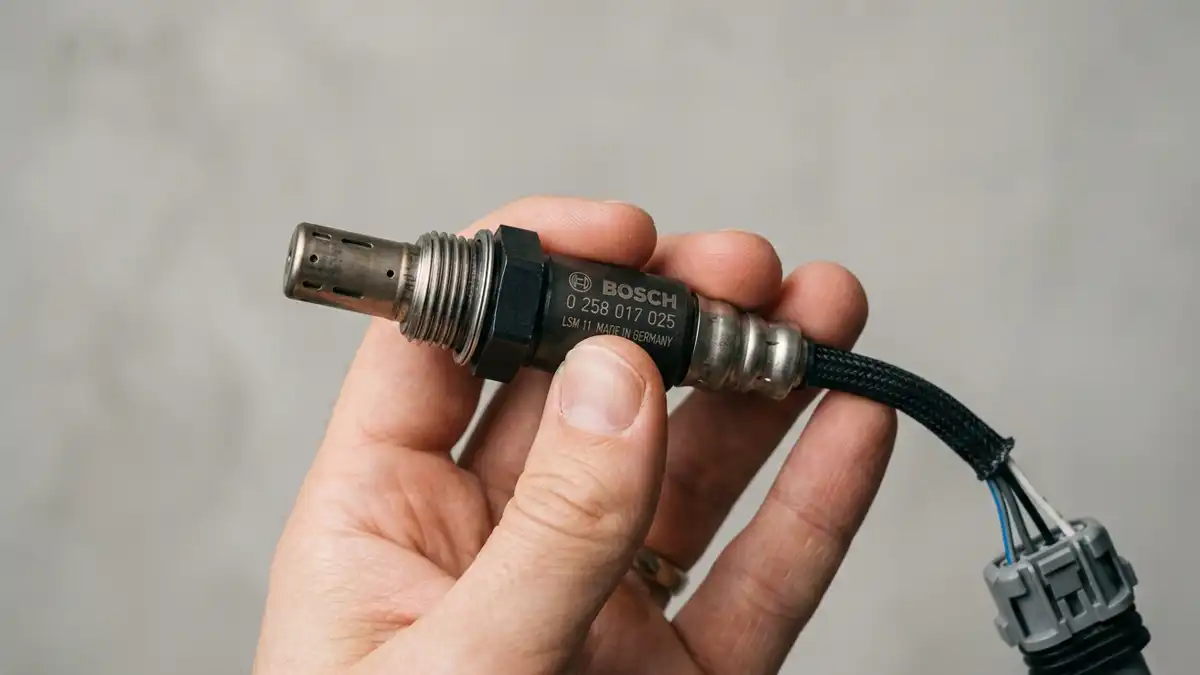
The sensor number is about position in the exhaust system, not which bank you’re on. Most cars with fuel injection have oxygen sensors (O2 sensors) in the exhaust, and they’re numbered by how far along the exhaust they sit:
- Sensor 1 is the “upstream” sensor — it sits before the catalytic converter, usually in or right after the exhaust manifold. It measures the fuel-air mixture leaving the engine, and the computer uses it to adjust fuel delivery. It’s often called the front or pre-cat sensor.
- Sensor 2 is the “downstream” sensor — it sits after the catalytic converter, further back in the exhaust. It checks how well the converter is cleaning the exhaust. It’s often called the rear or post-cat sensor.
Some cars with a V6 or V8 have two catalytic converters (one per bank), so they have both sensor 1 and sensor 2 on each bank — four O2 sensors total, plus sometimes extra ones on newer models.
Putting it together: what “bank 1 sensor 2” means
“Bank 1 sensor 2” is the downstream oxygen sensor on the bank-1 side of the engine — the one located after the catalytic converter on the same side as cylinder 1. On most cars, that means it’s underneath the vehicle, attached to the exhaust pipe behind the converter, and it can be a bit awkward to reach compared to the sensor 1 sensors up near the engine.
Its job is to watch the converter’s performance. When the converter starts failing, or when the sensor itself goes bad, the computer compares the readings from sensor 1 and sensor 2 to figure out what’s wrong.
Common codes that mention bank and sensor
Here are the codes you’re most likely to run into, and what the location terms mean:
| Code | What it describes | Where it is |
|---|---|---|
| P0135 | O2 sensor heater circuit, bank 1 sensor 1 | Upstream sensor on the bank-1 side, near the engine |
| P0141 | O2 sensor heater circuit, bank 1 sensor 2 | Downstream sensor on the bank-1 side, after the converter |
| P0420 | Catalyst efficiency below threshold, bank 1 | The catalytic converter on the bank-1 side isn’t cleaning well enough |
| P0430 | Catalyst efficiency below threshold, bank 2 | Same problem, but on the bank-2 side |
Notice that P0420 and P0430 say “bank” but not “sensor” — those codes point at the converter itself, not a specific sensor, though a failing sensor can cause them.
How to find bank 1 sensor 2 on your car
If you’re planning to replace it yourself, here’s the process:
- Identify bank 1 using the cylinder diagram from your owner’s manual or under-hood label.
- Find the catalytic converter on that bank. It looks like a metal canister in the exhaust pipe, usually with heat shields.
- Locate the oxygen sensor behind it. The downstream sensor (sensor 2) screws into the exhaust pipe after the converter. The upstream sensor (sensor 1) sits before it, near the engine.
- Count the sensors if you’re unsure. If the car has one bank (inline engine), sensor 2 is simply the one after the converter. If it has two banks, there will be a sensor 2 on each side — make sure you pick the one on bank 1.
O2 sensors look similar to each other, so double-check you’re at the right one before unplugging anything. A wrong guess means you’ll be back under the car again.
Common mistakes people make
- Assuming bank 1 is the driver’s side. It isn’t on every car. Use the cylinder diagram, not a guess.
- Replacing sensor 2 when the code says sensor 1 (or the other way around). The sensors are often interchangeable in appearance but are not interchangeable in function.
- Replacing an O2 sensor for a catalyst code. A P0420 or P0430 code is about the converter, and swapping sensors for that code is a common wasted expense. Get a proper diagnosis first.
- Ignoring the other codes in the list. If your car has both a heater circuit code and a catalyst code, fixing the sensor may change what the converter code means.
Why this matters
Getting bank and sensor right saves you time, money, and frustration. The parts are usually affordable, but the labor — or your own time under the car — is spent on the wrong component if you guess. When a code tells you exactly which sensor and which bank, it’s doing the hardest part of the job for you: pointing at the right part.
Frequently asked questions
Where exactly is bank 1 sensor 2 located? It’s the oxygen sensor screwed into the exhaust pipe after the catalytic converter on the bank-1 side of the engine (the side with cylinder 1). On most cars it’s underneath the vehicle, so you may need to raise the car safely to reach it.
How many oxygen sensors does my car have? It depends on the engine. An inline 4-cylinder with one converter typically has two sensors: one before the converter and one after. A V6 or V8 with two converters usually has four: two per bank. Some newer cars have additional sensors for stricter emissions standards, so check the code or the parts diagram for your exact model.
Is bank 1 always the driver’s side? No. Bank 1 is the side containing cylinder number 1, and which side that is varies by make, model, and engine layout. On many front-wheel-drive cars, cylinder 1 is on the passenger side. Always confirm with your owner’s manual or the emissions label under the hood before buying a part.