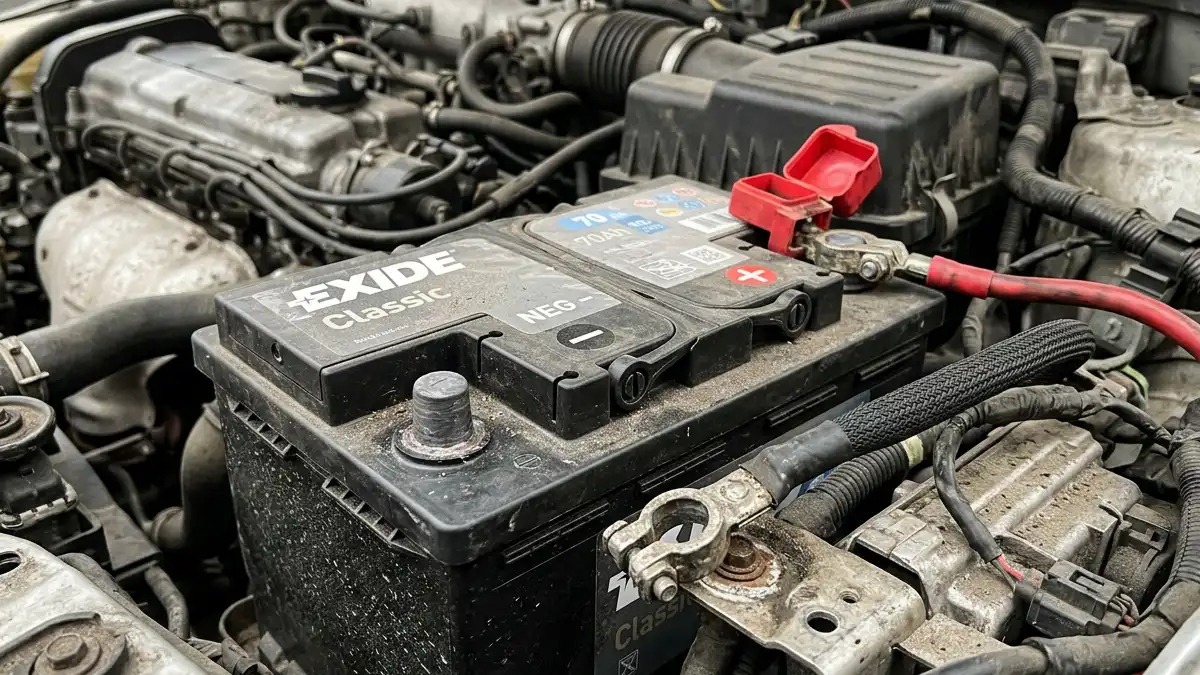
The old backyard trick goes like this: check engine light on, pop the hood, disconnect the battery, wait ten minutes, reconnect — and the light is gone. It works. But it’s worth understanding exactly what you just did: what got cleared, what didn’t, and why the light often comes back.
Yes, it clears the codes
When you disconnect the battery, the engine computer (the PCM) loses power, and its short-term memory wipes clean. That memory holds:
- Diagnostic trouble codes (DTCs) — like P0171 or P0300
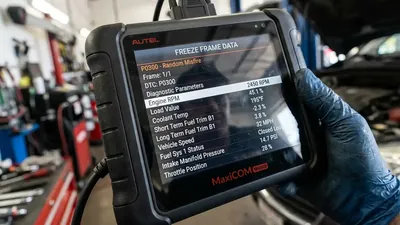
- Freeze frame data — a snapshot of engine conditions at the moment a code was stored
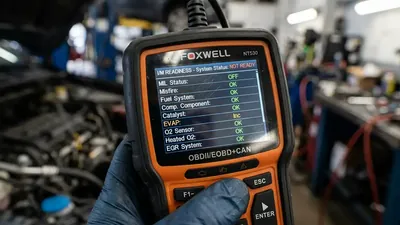
- Readiness monitor results — the records emissions tests rely on
- Learned values — like fuel trims and idle settings
So yes: disconnect, wait, reconnect, and the stored codes are gone. The check engine light goes out.
Why the light comes back
Here’s the part most people miss: the codes were only the computer’s report of a problem. The problem itself is still sitting in the engine. If the fault is still there, the computer will detect it again the next time it runs the related self-check, and the light will return — often within a day or two of driving.
Codes are symptoms, not the disease. If a P0171 lean code came from a vacuum leak, that leak doesn’t care that you unplugged the battery. As soon as the fuel system monitor runs, the code comes back.
How the computer’s memory actually works
The engine computer holds its codes and monitor results in volatile memory — the kind that needs constant power to keep its contents. When you disconnect the battery, that power goes away, and the memory empties. That’s why the light goes off.
The memory doesn’t empty instantly, though. The computer has capacitors that hold a small charge for a while, which is why the usual advice is to wait ten to fifteen minutes. Some people touch the battery cables together to drain the charge faster, but that’s unnecessary and can risk damaging modules, so don’t bother.
And on many newer cars, the story doesn’t end there: a separate permanent memory holds certain emissions codes that a battery disconnect can’t erase. More on that below.
The hidden cost: readiness monitors reset
This is the surprise that bites people. Disconnecting the battery doesn’t just clear codes — it also resets every readiness monitor to “not ready.” If you’re due for an emissions test, you’ve just guaranteed a “not ready” rejection until you complete a drive cycle (usually 20 to 30 minutes of specific driving).
On many newer cars, there’s a second layer of memory that a battery disconnect can’t touch: permanent codes. These are stored in a separate part of the computer and only clear after the car verifies the repair by completing its monitors. So even after a battery disconnect, a shop’s scanner can still see evidence that a fault existed.
What the car has to relearn
The PCM also forgets learned habits, including:
- Fuel trims — the long-term adjustments the computer made to the air-fuel mixture
- Idle speed control — the stored settings that keep the idle smooth
- Shift adaptations — on automatic transmissions, the learned shift behavior
After you reconnect, the car may idle high, run a little rough, or shift differently for a few minutes or a few days while it re-learns. That’s normal — not a new problem.
How long the relearn takes depends on the car and how you drive. Steady, normal driving — a mix of city and highway — is what the computer wants. There’s nothing to adjust by hand; just drive.
One caution: if the car runs poorly for more than a few days after a reconnect, that’s not a normal relearn. It usually means the original problem is still there, or something else was disturbed during the battery work. Have the codes read again rather than assuming it’s fine.
When disconnecting actually makes sense
There are legitimate reasons to disconnect the battery:
- You finished a real repair and want a clean slate without a scanner.
- A module is acting glitchy and needs a hard reset, like a stuck radio or a confused infotainment system.
- You’re storing the car and want to prevent battery drain.
But using a battery disconnect to hide a code from an emissions test is dishonest, and in some states it’s illegal. Don’t do that.
The side effects nobody mentions
Disconnecting the battery isn’t free:
- Radio presets and the clock reset.
- Some cars require a radio anti-theft code before the radio works again.
- Power seat, mirror, and window memory can reset.
- On hybrids, be extra careful: the high-voltage system stays live even with the 12V battery disconnected.
Does it work on every car?
Mostly, but not identically. Every car built since 1996 in the US uses the OBD2 system, and on the vast majority, a battery disconnect will clear the engine codes stored in the main computer. But cars differ in the details:
- Some manufacturers store certain codes in memory that survives a power loss, so the code may come right back even without the fault being present.
- Codes in other modules — like the ABS, airbag, or body control module — often survive a battery disconnect because those modules keep their own records.
- On hybrids, disconnecting the 12V battery can leave the computer in a confused state until the high-voltage system wakes up, so the car may need a few minutes of running before everything behaves.
The reliable way to know what’s stored is to read the codes with a scanner before and after. Guessing about memory behavior is how people get surprised.
The smarter approach
A scanner does everything a battery disconnect does — and more usefully:
| What happens | Disconnect the battery | Clear with a scanner |
|---|---|---|
| Engine codes erased | Yes | Yes |
| Readiness monitors reset to “not ready” | Yes | Yes |
| Freeze frame data erased | Yes | Yes |
| You can read the codes before clearing | No — they’re already gone | Yes |
| Radio presets and clock | Wiped | Untouched |
| Radio anti-theft code needed | On some cars | Never |
- Read the codes first. Knowing the code tells you what’s actually wrong. For example, P0340 and P0335 point to camshaft and crankshaft position sensor problems, P0128 to a thermostat that isn’t warming the engine properly, and P0300 to misfires.
- Fix the root cause.
- Clear the codes with the scanner.
- Complete a drive cycle so the monitors come back “ready.”
A basic code reader costs less than a single diagnostic visit and doesn’t wipe your radio presets. That’s the honest path.
Frequently asked questions
Will disconnecting the battery clear codes permanently? No. It erases the stored codes, but the underlying fault stays. If the problem is still present, the code will return the next time the computer runs that self-check.
How long should I leave the battery disconnected? Ten to fifteen minutes is enough for most cars. That gives the computer’s capacitors time to discharge so the memory actually clears.
Do I need to do anything after reconnecting? The car will relearn idle and fuel trims on its own, usually within a few days of driving. You’ll need to reset the clock and radio presets, and on some cars, enter the radio anti-theft code.